
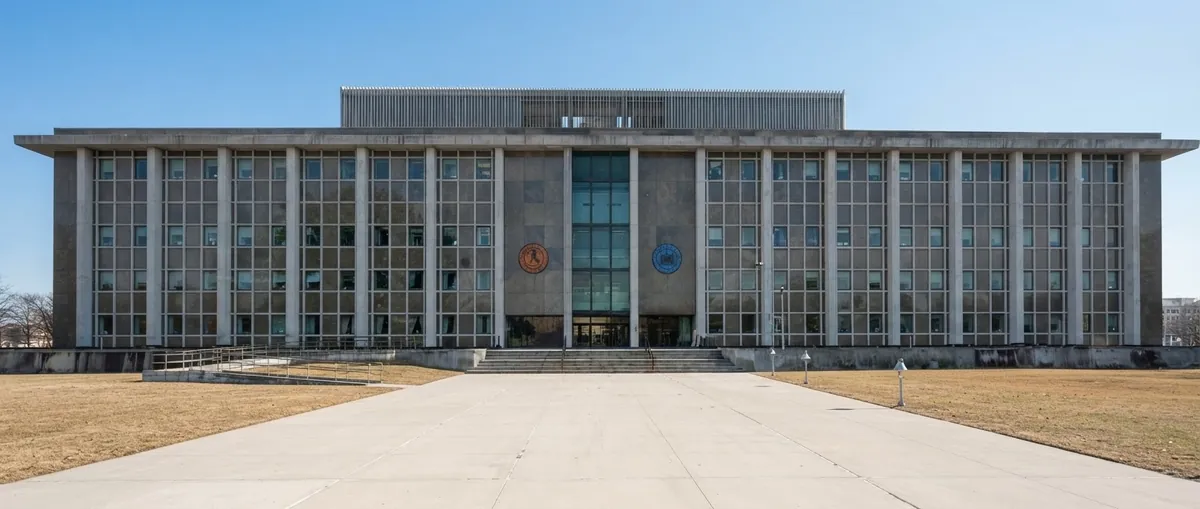
The court records of Nassau County in the state of New York are maintained by the office of the County Clerk and the offices of the respective courts. NassauCourt.us will help you find public information about court cases in this county. Additionally, records can be obtained through official court portals, the Nassau County Clerk's Office, and other government resources. Online tools allow searching for case materials, land records, and criminal history, while certified copies usually require direct contact with the office.
Nassau Court System Overview
Nassau County is part of the Tenth Judicial District of the Unified Court System of the state of New York, which also includes Suffolk, Queens, and Richmond counties. The county's courts are primarily located in Mineola, the county seat.
The Nassau court system includes several levels. The Supreme Court handles the most serious civil and criminal cases, while the County Court focuses on serious criminal offenses. The District Court handles misdemeanors, minor civil claims, and traffic violations throughout the county. Family Court, Surrogate's Court, and numerous Village and City Courts operate separately.
Courts Serving Nassau
Residents of Nassau are served by several state and federal court instances.
New York State Courts
Federal Courts
Nassau County also has numerous Village Justice Courts and City Courts (such as Long Beach City Court, Glen Cove City Court), which handle local violations and minor cases. A full list is available on the Courts & Legal Services page of the county.
What Types of Cases Nassau Courts Hear
Nassau courts hear a wide range of cases. Here are the main categories:
- Serious criminal offenses (felonies)
- Misdemeanors and minor violations
- Civil claims of any scale
- Small claims
- Family law: divorce, custody, alimony
- Probate cases, guardianship, trusts
- Juvenile cases and child protection
- Traffic violations, including DUI/DWI
Each type of case is heard by a specific court depending on jurisdiction and the claim amount. Below are details for each level.
District Court Cases in Nassau
The Nassau County District Court is one of the few county district courts in New York State outside of New York City. It hears:
- Misdemeanors of classes A and B
- Violations and minor infractions
- Civil cases with a claim amount up to $15,000
- Small claims up to $5,000
- Traffic violation cases
- Felony preliminary hearings
After the preliminary hearing, felony cases are transferred to the County Court or Supreme Court. Cases are assigned to judges according to an internal schedule. Hearings are held at several locations throughout the county, the main one being in Hempstead.
Magistrate Court Cases in Nassau
New York does not have a separate magistrate court system in the classical sense. The functions performed by magistrates in other states are handled by the District Court and numerous Village Justice Courts and City Courts in Nassau. These lower-level courts hear:
- Minor offenses and local ordinance violations
- Traffic violations
- DWI cases (arraignment and initial hearings)
- Civil claims up to $15,000 (in District Court)
- Small claims up to $5,000
Village and City Courts have limited jurisdiction — usually up to $15,000 in civil cases. For small claims, the limit is $5,000 according to state law. Due to the high volume of cases in Nassau, some judges specialize in specific categories, such as DWI or traffic violations.
Family Law, Probate, and Juvenile Matters in Nassau
Family Law
The Nassau County Family Court in Westbury handles cases of child custody, alimony, protective orders, paternity establishment, and termination of parental rights. Divorce in New York is handled by the Supreme Court — it is the only court with jurisdiction over marriage dissolution.
Probate Cases
The Surrogate's Court in Mineola is responsible for probate cases (estates of decedents), will approvals, appointment of guardians for incapacitated persons, and trust management. This court also handles adoption matters.
Juvenile Matters
Juvenile matters — including juvenile delinquency cases and child protective proceedings — are handled by the Family Court. Juvenile case records are confidential under New York law and are not publicly accessible.
How Cases Move Through the Nassau Court System
- Case Initiation. A criminal case begins with an arrest or the filing of a complaint. A civil case begins with the filing of a complaint or petition with the appropriate court office.
- Judge Assignment. The case receives an index number and is assigned to a judge according to the court's internal rules.
- Initial Hearings. In criminal cases — arraignment (charges are presented and bail is set). In civil cases — preliminary conference.
- Pre-trial Phase. Parties exchange evidence (discovery), file motions. In criminal cases, plea bargaining is possible.
- Trial or Resolution. The case concludes with a jury verdict, plea, settlement, or default judgment.
- Post-Decision. In criminal cases — sentencing. An appeal is filed with the Appellate Division, Second Department. In civil cases — enforcement of the judgment.
Court Administration, Local Rules, and Public Access in Nassau
Nassau courts are administered within the Tenth Judicial District under the leadership of the district administrative judge. Daily management is provided by the Office of the District Administrative Judge.
Local rules for the Tenth Judicial District courts are published on the New York Unified Court System website (nycourts.gov). These rules regulate the filing process, hearing schedules, and procedural requirements.
Public Access to Records
Most court records in New York are publicly accessible under Judiciary Law § 255 and the rules of the Unified Court System. Exceptions include:
- Juvenile cases — confidential
- Family cases — access is limited
- Sealed criminal cases under CPL § 160.50
- Mental health records
To request court files, you can use the court file requisition form on the county's website. Hearings are generally open to the public. Some Nassau courts offer remote participation via video conferencing — check with the specific court office.
Court Records and Related Court Resources in Nassau
- Case Search: For Supreme Court and County Court case materials, contact the County Clerk's Office or use the online file requisition form.
- Historical Court Records: Paper and microfilmed records of the Supreme Court are stored with the county clerk. Detailed information about available archives can be found on the Nassau historical court records page.
- Land Records and Real Estate: The Land Records Viewer allows searching for real estate records by address or parcel number (Section-Block-Lot). The Map Viewer displays each land parcel in the county.
- Property Taxes: Residents of the Town of Hempstead can view and pay tax bills online. State tax information is available on the NYS Department of Taxation and Finance website.
- Criminal History: The Division of Criminal Justice Services (DCJS) maintains the official state criminal record registry. New York residents can request their own criminal history through this resource.
- Sex Offender Registry: The official New York State registry contains information about registered individuals at risk levels 2 and 3.
- Inmate Search: To search for individuals in state correctional facilities, use the DOCCS tool or the NY.gov portal. Information about detainees at the Nassau County Correctional Center is available through the visitation system.
- Sheriff's Department: The Nassau County Sheriff's Department is responsible for enforcing court orders, transporting inmates, and securing court facilities.
- General Court Information: The Courts & Legal Services page on the county's website contains links to all court instances serving Nassau.
For a comprehensive search of public information about Nassau County court records, you can also use NassauCourt.us.